DiatomBase
DiatomBase name details
Thalassiosira anguste-lineata (A.Schmidt) G.Fryxell & Hasle, 1977
148914 (urn:lsid:marinespecies.org:taxname:148914)
uncertain > unassessed
Species
Coscinodiscus anguste-lineatus A.Schmidt, 1878 · unaccepted (basionym)
marine, brackish, fresh, terrestrial
recent only
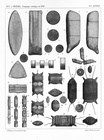
(of Coscinodiscus angustelineatus Schmidt in Schmidt et al., 1878) Schmidt, A. (1878). Atlas der Diatomaceen-kunde. Aschersleben, Commissions-Verlag Von Ludwig Siever's Buchandlung, Series II(Heft 15-16): pls. 57-64
page(s): pl. 59, fig. 34 [details]
page(s): pl. 59, fig. 34 [details]
Distribution cosmopolitan
Distribution cosmopolitan [details]
Kociolek, J.P.; Blanco, S.; Coste, M.; Ector, L.; Liu, Y.; Karthick, B.; Kulikovskiy, M.; Lundholm, N.; Ludwig, T.; Potapova, M.; Rimet, F.; Sabbe, K.; Sala, S.; Sar, E.; Taylor, J.; Van de Vijver, B.; Wetzel, C.E.; Williams, D.M.; Witkowski, A.; Witkowski, J. (2024). DiatomBase. Thalassiosira anguste-lineata (A.Schmidt) G.Fryxell & Hasle, 1977. Accessed at: https://www.diatombase.org/aphia.php?p=taxdetails&id=148914 on 2024-04-19
Date
action
by
2005-03-30 08:52:46Z
created
db_admin
2017-03-16 12:51:51Z
changed
db_admin
2018-01-31 09:33:29Z
changed
db_admin
2018-02-01 09:09:54Z
changed
db_admin
original description
(of Coscinodiscus angustelineatus Schmidt in Schmidt et al., 1878) Schmidt, A. (1878). Atlas der Diatomaceen-kunde. Aschersleben, Commissions-Verlag Von Ludwig Siever's Buchandlung, Series II(Heft 15-16): pls. 57-64
page(s): pl. 59, fig. 34 [details]
context source (HKRMS) Glenwright, T.; Dickman, M. (1997). Diatom assemblages in surficial sediments along a transect between the ninepin island group and Kowloon Bay, Hong Kong. <em>Morton B, editor. Proceedings of the Eighth International Marine Biological Workshop: The Marine Flora and Fauna of Hong Kong and Southern China. The Marine Flora and Fauna of Hong Kong and Southern China IV. Hong Kong University Press, Hong Kong.</em> 339-359. [details]
context source (Schelde) MWTL biological monitoring network Westerschelde: Phytoplankton [MWTL biologisch monitoring netwerk Westerschelde: Fytoplankton] [details]
basis of record Muylaert, K.; Sabbe, K. (1996). The diatom genus Thalassiosira (Bacillariophyta) in the estuaries of the Schelde (Belgium/The Netherlands) and the Elbe (Germany). <em>Botanica Marina.</em> 39: 103-115. (look up in IMIS) [details] Available for editors [request]
additional source Tomas, C.R. (Ed.). (1997). Identifying marine phytoplankton. Academic Press: San Diego, CA [etc.] (USA). ISBN 0-12-693018-X. XV, 858 pp., available online at http://www.sciencedirect.com/science/book/9780126930184 [details]
additional source Horner, R. A. (2002). A taxonomic guide to some common marine phytoplankton. <em>Biopress Ltd. Bristol.</em> 1-195. [details]
additional source Martin, J. L.; LeGresley, M. M. ; Strain, P. M. (2001). Phytoplankton monitoring in the Western Isles region of the Bay of Fundy during 1997-98. <em>Canadian Technical Report of Fisheries and Aquatic Sciences 2349.</em> 4: 1-85. [details]
additional source Hällfors, G. (2004). Checklist of Baltic Sea Phytoplankton Species (including some heterotrophic protistan groups). <em>Baltic Sea Environment Proceedings.</em> No. 95: 210 pp., available online at http://helcom.fi/Lists/Publications/BSEP95.pdf [details] Available for editors [request]
additional source Fourtanier, E. & Kociolek, J. P. (compilers). (2011). Catalogue of Diatom Names. California Academy of Sciences, On-line Version. Updated 2011-09-19., available online at http://researcharchive.calacademy.org/research/diatoms/names/index.asp [details]
additional source Krayesky, D. M.; Meave, D. C.; Zamudio, E.; Norris, E.; Fredericq, S.; Tunnell, J. (2009). Diatoms (Bacillariophyta) of the Gulf of Mexico. <em>Gulf of Mexico origin, waters, and biota.</em> 1: 155-186. [details] Available for editors [request]
additional source Harper, M.A.; Cassie Cooper, V.; Chang, F.H.; Nelson, W.A.; Broady, P.A. (2012). Phylum Ochrophyta: brown and golden-brown algae, diatoms, silicoflagellates, and kin, in: Gordon, D.P. (Ed.) (2012). New Zealand inventory of biodiversity: 3. Kingdoms Bacteria, Protozoa, Chromista, Plantae, Fungi. pp. 114-163. [details]
additional source Hasle, G. R.; Syvertsen, E. E. (1997). Marine Diatoms. pp. 5-385. In: C.R. Tomas (ed.) (1997). Identifying Marine Phytoplankton. Academic Press: San Diego, CA [etc.] (USA). ISBN 0-12-693018-X. XV, 858 pp., available online at http://www.sciencedirect.com/science/article/pii/B9780126930184500045 [details]
additional source Integrated Taxonomic Information System (ITIS). , available online at http://www.itis.gov [details]
page(s): pl. 59, fig. 34 [details]
context source (HKRMS) Glenwright, T.; Dickman, M. (1997). Diatom assemblages in surficial sediments along a transect between the ninepin island group and Kowloon Bay, Hong Kong. <em>Morton B, editor. Proceedings of the Eighth International Marine Biological Workshop: The Marine Flora and Fauna of Hong Kong and Southern China. The Marine Flora and Fauna of Hong Kong and Southern China IV. Hong Kong University Press, Hong Kong.</em> 339-359. [details]
context source (Schelde) MWTL biological monitoring network Westerschelde: Phytoplankton [MWTL biologisch monitoring netwerk Westerschelde: Fytoplankton] [details]
basis of record Muylaert, K.; Sabbe, K. (1996). The diatom genus Thalassiosira (Bacillariophyta) in the estuaries of the Schelde (Belgium/The Netherlands) and the Elbe (Germany). <em>Botanica Marina.</em> 39: 103-115. (look up in IMIS) [details] Available for editors
[request] additional source Tomas, C.R. (Ed.). (1997). Identifying marine phytoplankton. Academic Press: San Diego, CA [etc.] (USA). ISBN 0-12-693018-X. XV, 858 pp., available online at http://www.sciencedirect.com/science/book/9780126930184 [details]
additional source Horner, R. A. (2002). A taxonomic guide to some common marine phytoplankton. <em>Biopress Ltd. Bristol.</em> 1-195. [details]
additional source Martin, J. L.; LeGresley, M. M. ; Strain, P. M. (2001). Phytoplankton monitoring in the Western Isles region of the Bay of Fundy during 1997-98. <em>Canadian Technical Report of Fisheries and Aquatic Sciences 2349.</em> 4: 1-85. [details]
additional source Hällfors, G. (2004). Checklist of Baltic Sea Phytoplankton Species (including some heterotrophic protistan groups). <em>Baltic Sea Environment Proceedings.</em> No. 95: 210 pp., available online at http://helcom.fi/Lists/Publications/BSEP95.pdf [details] Available for editors
[request] additional source Fourtanier, E. & Kociolek, J. P. (compilers). (2011). Catalogue of Diatom Names. California Academy of Sciences, On-line Version. Updated 2011-09-19., available online at http://researcharchive.calacademy.org/research/diatoms/names/index.asp [details]
additional source Krayesky, D. M.; Meave, D. C.; Zamudio, E.; Norris, E.; Fredericq, S.; Tunnell, J. (2009). Diatoms (Bacillariophyta) of the Gulf of Mexico. <em>Gulf of Mexico origin, waters, and biota.</em> 1: 155-186. [details] Available for editors
[request] additional source Harper, M.A.; Cassie Cooper, V.; Chang, F.H.; Nelson, W.A.; Broady, P.A. (2012). Phylum Ochrophyta: brown and golden-brown algae, diatoms, silicoflagellates, and kin, in: Gordon, D.P. (Ed.) (2012). New Zealand inventory of biodiversity: 3. Kingdoms Bacteria, Protozoa, Chromista, Plantae, Fungi. pp. 114-163. [details]
additional source Hasle, G. R.; Syvertsen, E. E. (1997). Marine Diatoms. pp. 5-385. In: C.R. Tomas (ed.) (1997). Identifying Marine Phytoplankton. Academic Press: San Diego, CA [etc.] (USA). ISBN 0-12-693018-X. XV, 858 pp., available online at http://www.sciencedirect.com/science/article/pii/B9780126930184500045 [details]
additional source Integrated Taxonomic Information System (ITIS). , available online at http://www.itis.gov [details]
 Present Inaccurate Introduced: alien Containing type locality
From other sources
Diet phytosynthetic [details]Distribution cosmopolitan [details]
Habitat pelagic or attached to various marine life [details]
Importance most abundant phylum of algae [details]
Morphology yellow brown in color, not green [details]
Predators marine microorganisms and animal larvae [details]
Reproduction general for group: both sexual and asexual [details]
PlanktonNet Image
To Barcode of Life
To Biodiversity Heritage Library (10 publications) (from synonym Coscinodiscus anguste-lineatus A.Schmidt, 1878)
To Biodiversity Heritage Library (2 publications)
To Catalogue of Diatom Names (CAS)
To Dyntaxa
To European Nucleotide Archive (ENA)
To GenBank (45 nucleotides; 30 proteins)
To PESI
To PESI (from synonym Coscinodiscus anguste-lineatus A.Schmidt, 1878)
To Barcode of Life
To Biodiversity Heritage Library (10 publications) (from synonym Coscinodiscus anguste-lineatus A.Schmidt, 1878)
To Biodiversity Heritage Library (2 publications)
To Catalogue of Diatom Names (CAS)
To Dyntaxa
To European Nucleotide Archive (ENA)
To GenBank (45 nucleotides; 30 proteins)
To PESI
To PESI (from synonym Coscinodiscus anguste-lineatus A.Schmidt, 1878)