DiatomBase
DiatomBase name details
Odontella regia (Schultze) Simonsen, 1974
149094 (urn:lsid:marinespecies.org:taxname:149094)
uncertain > unassessed
Species
marine, terrestrial
recent only
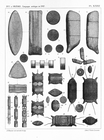
(of Denticella regia Schultze, 1858) Schultze, M. (1859). Phenomena of internal movements in Diatomaceae of the North Sea, belonging to the genera Coscinodiscus, Denticella and Rhizosolenia. Quarterly Journal of Microscopical Science, London, 7: 13-21, pl. II., available online at https://doi.org/10.1242/jcs.s1-7.25.13
page(s): p. 21; pl. 2, fig. 11, 12 [details]
page(s): p. 21; pl. 2, fig. 11, 12 [details]
Distribution geographic region not obtained; recorded as being found in the Bay of Fundy
Distribution geographic region not obtained; recorded as being found in the Bay of Fundy [details]
Kociolek, J.P.; Blanco, S.; Coste, M.; Ector, L.; Liu, Y.; Karthick, B.; Kulikovskiy, M.; Lundholm, N.; Ludwig, T.; Potapova, M.; Rimet, F.; Sabbe, K.; Sala, S.; Sar, E.; Taylor, J.; Van de Vijver, B.; Wetzel, C.E.; Williams, D.M.; Witkowski, A.; Witkowski, J. (2026). DiatomBase. Odontella regia (Schultze) Simonsen, 1974. Accessed at: https://www.diatombase.org/aphia.php?p=taxdetails&id=149094 on 2026-11-01
Date
action
by
2005-03-30 08:52:46Z
created
db_admin
2018-01-31 09:33:29Z
changed
db_admin
original description
(of Denticella regia Schultze, 1858) Schultze, M. (1859). Phenomena of internal movements in Diatomaceae of the North Sea, belonging to the genera Coscinodiscus, Denticella and Rhizosolenia. Quarterly Journal of Microscopical Science, London, 7: 13-21, pl. II., available online at https://doi.org/10.1242/jcs.s1-7.25.13
page(s): p. 21; pl. 2, fig. 11, 12 [details]
context source (HKRMS) Lam CWY. & Ho KC. (1988). Phytoplankton characteristics of Tolo Harbour. In: Morton B, editor. Asian Marine Biology 6. pp 5-18. Hong Kong University Press, Hong Kong. [details]
context source (Schelde) Maris, T., O. Beauchard, S. Van Damme, E. Van den Bergh, S. Wijnhoven & P. Meire. (2013). Referentiematrices en Ecotoopoppervlaktes Annex bij de Evaluatiemethodiek Schelde-estuarium Studie naar “Ecotoopoppervlaktes en intactness index”. [Reference matrices and Ecotope areas Annex to the Evaluation methodology Scheldt estuary Study on “Ecotope areas and intactness index”. <em>Monitor Taskforce Publication Series, 2013-01. NIOZ: Yerseke.</em> 35 pp. (look up in IMIS) [details]
basis of record Fourtanier, E. & Kociolek, J. P. (compilers). (2011). Catalogue of Diatom Names. California Academy of Sciences, On-line Version. Updated 2011-09-19., available online at http://researcharchive.calacademy.org/research/diatoms/names/index.asp [details]
additional source Hasle, G. R.; Syvertsen, E. E. (1997). Marine Diatoms. pp. 5-385. In: C.R. Tomas (ed.) (1997). Identifying Marine Phytoplankton. Academic Press: San Diego, CA [etc.] (USA). ISBN 0-12-693018-X. XV, 858 pp., available online at http://www.sciencedirect.com/science/article/pii/B9780126930184500045 [details]
additional source Integrated Taxonomic Information System (ITIS). , available online at http://www.itis.gov [details]
additional source Krayesky, D. M.; Meave, D. C.; Zamudio, E.; Norris, E.; Fredericq, S.; Tunnell, J. (2009). Diatoms (Bacillariophyta) of the Gulf of Mexico. <em>Gulf of Mexico origin, waters, and biota.</em> 1: 155-186. [details] Available for editors [request]
additional source Linkletter, L. E. (1977). A checklist of marine fauna and flora of the Bay of Fundy. <em>Huntsman Marine Laboratory, St. Andrews, N.B.</em> 68: p. [details]
additional source Martin, J. L.; LeGresley, M. M. ; Strain, P. M. (2001). Phytoplankton monitoring in the Western Isles region of the Bay of Fundy during 1997-98. <em>Canadian Technical Report of Fisheries and Aquatic Sciences 2349.</em> 4: 1-85. [details]
additional source Tomas, C.R. (Ed.). (1997). Identifying marine phytoplankton. Academic Press: San Diego, CA [etc.] (USA). ISBN 0-12-693018-X. XV, 858 pp., available online at http://www.sciencedirect.com/science/book/9780126930184 [details]
new combination reference Simonsen, R. (1974). The diatom plankton of the Indian Ocean Expedition of R/V Meteor 1964-5. "Meteor. <em>Forschungsergebnisse, Reihe D: Biologie.</em> 19: 1-107.
page(s): p. 27 [details]
page(s): p. 21; pl. 2, fig. 11, 12 [details]
context source (HKRMS) Lam CWY. & Ho KC. (1988). Phytoplankton characteristics of Tolo Harbour. In: Morton B, editor. Asian Marine Biology 6. pp 5-18. Hong Kong University Press, Hong Kong. [details]
context source (Schelde) Maris, T., O. Beauchard, S. Van Damme, E. Van den Bergh, S. Wijnhoven & P. Meire. (2013). Referentiematrices en Ecotoopoppervlaktes Annex bij de Evaluatiemethodiek Schelde-estuarium Studie naar “Ecotoopoppervlaktes en intactness index”. [Reference matrices and Ecotope areas Annex to the Evaluation methodology Scheldt estuary Study on “Ecotope areas and intactness index”. <em>Monitor Taskforce Publication Series, 2013-01. NIOZ: Yerseke.</em> 35 pp. (look up in IMIS) [details]
basis of record Fourtanier, E. & Kociolek, J. P. (compilers). (2011). Catalogue of Diatom Names. California Academy of Sciences, On-line Version. Updated 2011-09-19., available online at http://researcharchive.calacademy.org/research/diatoms/names/index.asp [details]
additional source Hasle, G. R.; Syvertsen, E. E. (1997). Marine Diatoms. pp. 5-385. In: C.R. Tomas (ed.) (1997). Identifying Marine Phytoplankton. Academic Press: San Diego, CA [etc.] (USA). ISBN 0-12-693018-X. XV, 858 pp., available online at http://www.sciencedirect.com/science/article/pii/B9780126930184500045 [details]
additional source Integrated Taxonomic Information System (ITIS). , available online at http://www.itis.gov [details]
additional source Krayesky, D. M.; Meave, D. C.; Zamudio, E.; Norris, E.; Fredericq, S.; Tunnell, J. (2009). Diatoms (Bacillariophyta) of the Gulf of Mexico. <em>Gulf of Mexico origin, waters, and biota.</em> 1: 155-186. [details] Available for editors
[request]additional source Linkletter, L. E. (1977). A checklist of marine fauna and flora of the Bay of Fundy. <em>Huntsman Marine Laboratory, St. Andrews, N.B.</em> 68: p. [details]
additional source Martin, J. L.; LeGresley, M. M. ; Strain, P. M. (2001). Phytoplankton monitoring in the Western Isles region of the Bay of Fundy during 1997-98. <em>Canadian Technical Report of Fisheries and Aquatic Sciences 2349.</em> 4: 1-85. [details]
additional source Tomas, C.R. (Ed.). (1997). Identifying marine phytoplankton. Academic Press: San Diego, CA [etc.] (USA). ISBN 0-12-693018-X. XV, 858 pp., available online at http://www.sciencedirect.com/science/book/9780126930184 [details]
new combination reference Simonsen, R. (1974). The diatom plankton of the Indian Ocean Expedition of R/V Meteor 1964-5. "Meteor. <em>Forschungsergebnisse, Reihe D: Biologie.</em> 19: 1-107.
page(s): p. 27 [details]
 Present Inaccurate Introduced: alien Containing type locality
Unreviewed
Diet phytosynthetic [details]Distribution geographic region not obtained; recorded as being found in the Bay of Fundy [details]
Habitat pelagic or attached to various marine life [details]
Importance most abundant phylum of algae [details]
Morphology yellow brown in color, not green [details]
Predators marine microorganisms and animal larvae [details]
Reproduction general for group: both sexual and asexual [details]
PlanktonNet Image
To Biodiversity Heritage Library (1 publication)
To Catalogue of Diatom Names (CAS)
To Dyntaxa
To European Nucleotide Archive, ENA (Odontella regia)
To GenBank (19 nucleotides; 343 proteins)
To PESI
To ITIS
To Biodiversity Heritage Library (1 publication)
To Catalogue of Diatom Names (CAS)
To Dyntaxa
To European Nucleotide Archive, ENA (Odontella regia)
To GenBank (19 nucleotides; 343 proteins)
To PESI
To ITIS
Unreviewed

Hosted externally